

|
The Arctic National Wildllife Refuge is the most biologically diverse arctic region in the world. It is home to 45 species of mammals, 180 species of birds, and 23 different kinds of fish. The 1.5 million acre coastal plain region known as the 1002 area is also the home and calving grounds of the largest caribou herd in the world, totaling 123,000 animals. This area needs to be conserved. The little bit of oil that is in ANWR is not worth the environmental risks that are posed.
Common arguments for development include:
According to the U.S. Geological Survey, there is about
3 to 10 billion barrels of economically recoverable oil at a price of $30
per barrel, not far below today’s prices. At $13 per barrel, it is
estimated that there would be no economically recoverable oil. Even if all
the oil was there that is predicted, it would only be enough oil to run the
country for a little more than a year. It is not worth causing
The biggest argument, or at least the one that you’ll
hear most often is that the coastal plains of the 1002 area is the calving
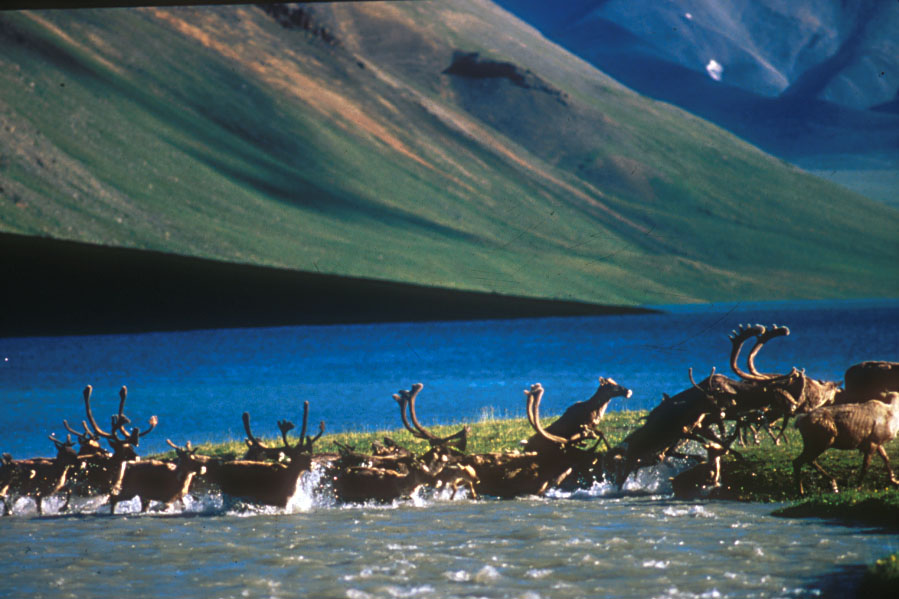
grounds for the Porcupine Caribou Herd, the
largest herd of caribou in the world. Looking at the map, you can see that
the core calving area, where there is the most concentrated amount of
births, basically is the 1002 area. Besides preserving the herd for
the sake of nature and beauty, it is also life line of the
Gwich’in Indians, who rely on the caribou
for their subsistent life style. Not only that, but the caribou are sacred
to them. According to the Gwich’in Creation Story “…the Gwich’in came from
the caribou when there was a separation of humans from the animals…[and
that] the Gwich’in would retain a part of the caribou heart and the caribou
would retain a part of the Gwich’in heart… What befalls the caribou befalls
the Gwich’in.” The caribou are especially threatened because they
habitually show a 4 km avoidance of oil infrastructure. It would be
disastrous for them if they went elsewhere for calving season. The
coastal plains is wide open, which allows young caribou to spot predators
from far off. The plants there are lush and nutritious, just what
mothers and newborn claves need to gain strength. The area is also
protected from bugs and insects Claims that the caribou and other wildlife would not be significantly affected because of better technology are false. For instance, developers are proud to say that they build with ice instead of gravel. However, using ice disrupts the water table. Because the ground is frozen solid, water does not soak back into the water table from which it came, but is often shed off and displaced. This creates huge deficits in local rivers and lakes that can take years to replenish with the meager 3 to 7 inches of annual precipitation. Also, due to leaky valves and oil spills, environmental impacts go far beyond the physical footprint of drilling area. Besides, with the drill pads comes a network of exploration and transportation trails and pipelines. Currently, there are 1400 acres of gravel mines, 400 miles of gravel roads, and 1200 miles of pipelines. Each new oil field would need about 280 miles of roads and hundreds of miles of pipeline. The coastal plains area is also becoming increasingly important to polar bears who are more frequently using dens on land instead of on icebergs thinned by global warming As far a regulations serving to protect them
environment, that’s a joke. All that happens is that procedures a covered
in secrecy. Even British Petroleum employees who support drilling say that
BP should not be allowed into ANWR until it fixes its leaky valves and
regulation problems. In 2001, 70 of BP’s employee’s publicly announced that
company was in direct violation of its probation regarding spills and
regulation. The company did nothing to address their concerns. Even with
the strict regulations we have, oil companies only seek to hide the truth,
not avoid Most importantly, we should be focusing on other forms of energy. We have the technology, it just isn’t cheap enough yet that it is economical to use it. If we invested in making those technologies cheaper, instead of expanding the oil industry, we would be much better off. Think of these lovely statistics. The oil fields release 11 million metric tons of carbon dioxide annually, and Prudhoe Bay alone releases 48,000 to 72,000 metric tons of nitrogen oxides, both compounds being significant contributors to Global Warming. Another greenhouse gas, methane, is release in amounts from 96,000 to 144,000 metric tons. Rather than contributing to Global Warming, we could be investing in clean and renewable energy like photovoltaic batteries and fuel cells. Like was stated, we do have the technology, we only need to invest in it. That is the wise and responsible thing to do. |


|
Contents
Home Background The Debate For Oil Against Oil List of Terms Links References |

 permanent
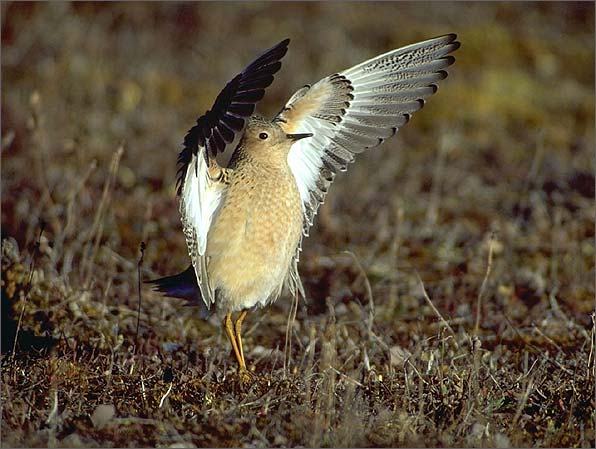
damage just for a little oil. For instance, the Audubon Alaska WatchList
predicts that the buff-breasted sandpiper will become one of the five most
endangered species in the world if development continues. Besides, 95%
of the North Slope is already open for development. Forgoing one
relatively small area is worth the diversity that would be saved
permanent
damage just for a little oil. For instance, the Audubon Alaska WatchList
predicts that the buff-breasted sandpiper will become one of the five most
endangered species in the world if development continues. Besides, 95%
of the North Slope is already open for development. Forgoing one
relatively small area is worth the diversity that would be saved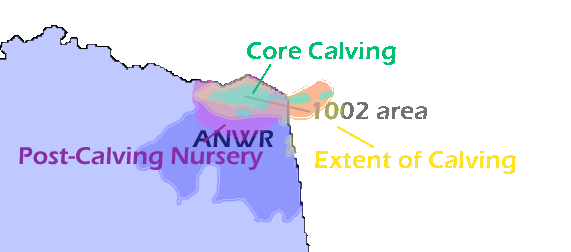
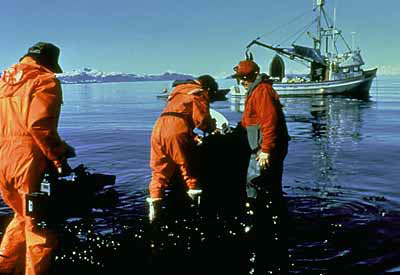 trouble. Even with regulations and what safety procedures are in
place today, Prudhoe Bay suffers 400 oil spills every year of varying
sizes. We do not want another incident like the
trouble. Even with regulations and what safety procedures are in
place today, Prudhoe Bay suffers 400 oil spills every year of varying
sizes. We do not want another incident like the