

|
Currently, the U.S. consumes 7 billion barrels of oil annually. Since only 4 billion of the barrels are produced domestically, that means that the U.S. is importing 3 billion barrels of oil every year. To top it off, most of our oil comes from the unstable Middle East. As a way to increase America’s oil security, President Bush is pushing to have Area 1002 of the Arctic National Wildlife Refuge opened for drilling. Common arguments for development include:
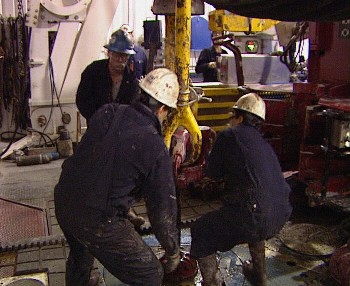
Another economic benefit is that development will bring more jobs, not just in Alaska, but all over the nation as companies expand to match their increased production. Arctic Power predicts that 736,000 new jobs would be created nationwide by the development of ANWR. Not only that, but the government collects money from the oil industry, both in the form of land leases and royalties from production. In fact, the Bush Administration expects it can earn $2.6 billion in leases alone. Alaskan residents receive some of the royalties directly, which would boost their economy. Currently, Alaskans receive about $2000 per year from the industry. With oil production at Prudhoe Bay slowing in recent years, the Alaskan economy could use a boost.
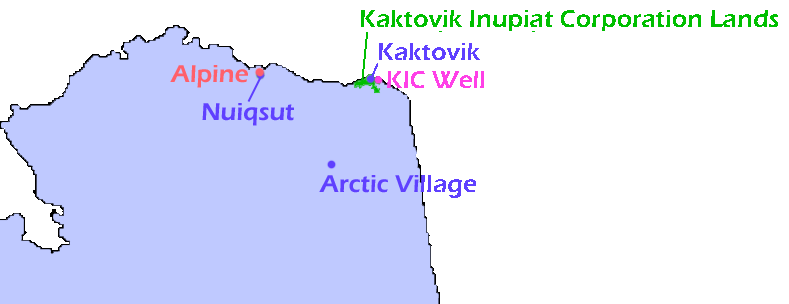
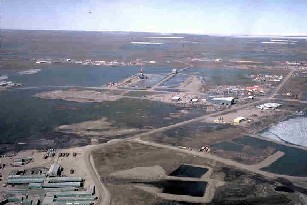
The people in Kaktovik, a town of native Inupiat Eskimos, would have the most to gain. Owning 94,000 acres of land within the 1002 area, they not only could receive the royalties from the oil industry as a whole, but could lease out their own land. In 1985, the Kaktovik Inupiat Corporation leased a small plot of land to British Petroleum (BP) to do a test drill. Known as the KIC Well, the results of the drill are still secret. Some say that BP is only trying to "whet people's appetites." Already from the oil industry, Kaktovik has received funding for a large school with a pool, a community center, a health clinic, better houses, and street lights. Many are eager about the high paying jobs that would come, too. To the west of Prudhoe bay, there is another Inupiat town, Nuiqsut. This town also owns land on which oil exists. Unlike Kaktovik, Nuiqsut’s land is in an area that is open for development and they are already leasing land and collecting money for development occurring in their backyard. Their town, abandoned in the 1940’s to be resettled in 1973, relies on the revenue that the oil industry brings. They, too, have been able to build a community center, a school, and other public facilities. Some natives like to point out too that, historically, it has not mattered what the native people thought, if their wishes conflicted with the American government’s, they were pushed aside and overruled. It is time that the native people are given true control of what is theirs. Many argue that they have been keepers of that land for time unmemorable and have proven that they are thoughtful conservationists. They say that they too, do not want anything to happen to land they call home and will make sure that developers act responsibly.
Not only does technology minimize impact, but laws also
mandate |


|
Contents
Home Background The Debate For Oil Against Oil List of Terms Links References |

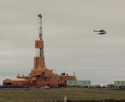 There is a large quantity of oil in ANWR.
 Another way that the land would be conserved is through
improved technology. Today, proponents argue that oil development leaves
99.9% of the land untouched. The size of drilling pads has been reduced by
70% since the industry began. A British Potroleum (BP) representative
asserts that if the field in Prudhoe Bay were built today, only 4,000 of the
12,000 acres it now occupies would be needed. Roads are constructed with
ice instead of gravel in the winter time. In the spring, the construction
melts, leaving only the drill pad behind. This means both that there will
not be gravel left over in the Spring and that the gravel would not have to
be mined from elsewhere. Also, utilizing horizontal drilling, a single
drill pad can cover a large area. Rather than having to use many drill
pads, each only being able to drill downward, today’s technology allows
developers to drill down and then horizontally over a large area, up to 4
miles away from the drilling pad.
Another way that the land would be conserved is through
improved technology. Today, proponents argue that oil development leaves
99.9% of the land untouched. The size of drilling pads has been reduced by
70% since the industry began. A British Potroleum (BP) representative
asserts that if the field in Prudhoe Bay were built today, only 4,000 of the
12,000 acres it now occupies would be needed. Roads are constructed with
ice instead of gravel in the winter time. In the spring, the construction
melts, leaving only the drill pad behind. This means both that there will
not be gravel left over in the Spring and that the gravel would not have to
be mined from elsewhere. Also, utilizing horizontal drilling, a single
drill pad can cover a large area. Rather than having to use many drill
pads, each only being able to drill downward, today’s technology allows
developers to drill down and then horizontally over a large area, up to 4
miles away from the drilling pad.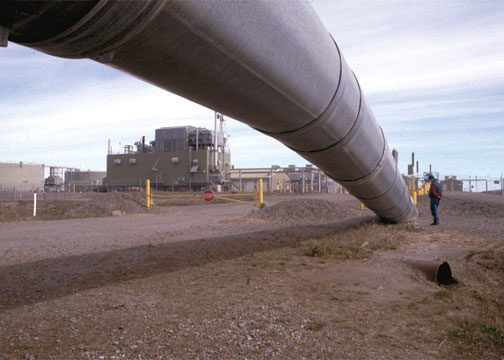 environmentally safe procedures. An executive from BP asserts that
the penalties for not being up to code are so harsh that there’s no way
developers wouldn’t follow procedures. Developers want to avoid spills as
much as anyone else; if there’s a spill they are the ones that have to pay
to clean it up and restore the area. It’s a simple matter of economics; pay
a little now to avoid huge costs later. Clean up costs and imposed fines
make it worth it to take measures to protect the environment.
environmentally safe procedures. An executive from BP asserts that
the penalties for not being up to code are so harsh that there’s no way
developers wouldn’t follow procedures. Developers want to avoid spills as
much as anyone else; if there’s a spill they are the ones that have to pay
to clean it up and restore the area. It’s a simple matter of economics; pay
a little now to avoid huge costs later. Clean up costs and imposed fines
make it worth it to take measures to protect the environment.